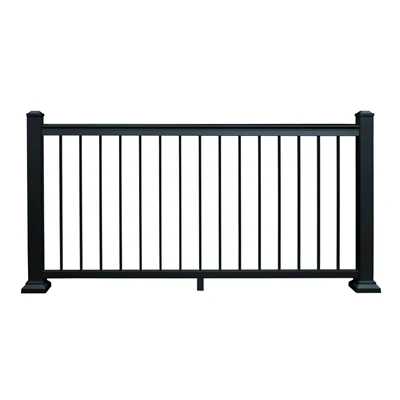
Cable Railing Manufacturer
— Custom-Engineered Cable Guardrail & Handrail Systems for Commercial, Architectural & Coastal Projects
The complete category guide to tensioned-stainless cable barriers: how the family splits by orientation and frame metal, what 1×19 construction and 316 grade actually buy you, horizontal vs vertical engineering, tension and the 4 in sphere rule, aluminum vs steel vs full-stainless frames, and how a made-to-spec manufacturer turns a layout into a shipped, drawn and code-documented system.
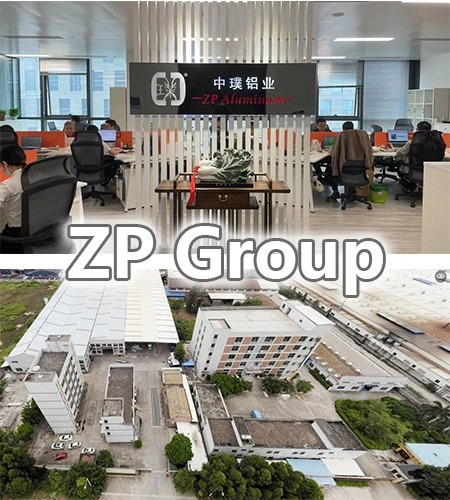
ZP Railing is a cable railing manufacturer that engineers and fabricates tensioned-stainless cable guardrail, handrail and balustrade systems for contractors, architects, engineers and project specifiers worldwide. We are not a reseller moving catalog kits — every system is built around project-specific dimensions, from in-house post fabrication and cable cutting/swaging through powder-coated aluminum or stainless frames, PE-stampable shop drawings and crated shipment against your bill of materials.
A cable railing is a safety barrier first and a view second. Our engineering team turns your drawings into shop drawings and post-spacing and deflection calculations to IBC, IRC, BS 6180 or AS/NZS 1170 where applicable, supports PE stamping for permitting, and resolves the details that off-the-shelf kits ignore — tension values that hold the 4 in sphere rule under load, end-post moment connections on long horizontal runs, intermediate stabilizers, and anchor design into wood, concrete or steel. When a deck, balcony, staircase or rooftop terrace calls for an open, near-invisible barrier with a documented load rating, we fabricate to that specification instead of asking you to redesign around a standard panel.
Looking for a specific cable product?
- Cable as a material (1×19, diameter, 316 vs 304)? See Steel Cable Railing.
- Cable on a deck (mounts, blocking, code)? See Steel Cable Deck Railing.
- Long horizontal run engineering? See Horizontal Cable Railing.
- Climb-safe vertical orientation? See Vertical Cable Railing.
- Aluminum vs steel frame? See Metal Cable Railing.
- Aluminum-framed horizontal cable? See Horizontal Aluminum Cable Railing.
- Complete 316/304 stainless system for decks? See Stainless Steel Cable Railing Systems for Decks.
- Buy cable by the meter / fittings only? See Stainless Steel Deck Cable.
- Modern / design lookbook? See Modern Cable Railing.
- Wire, mesh & rigid infill overview? See Wire Railing Systems.
-
![Horizontal Aluminum Cable Railing]() Horizontal Aluminum Cable RailingA horizontal aluminum cable railing is a guard where a powder-coated aluminum frame — posts and a top and bottom rail — carries a run of taut, level stainless-steel cables stretched horizontally...view more
Horizontal Aluminum Cable RailingA horizontal aluminum cable railing is a guard where a powder-coated aluminum frame — posts and a top and bottom rail — carries a run of taut, level stainless-steel cables stretched horizontally...view more -
![Wire Railing Systems]() Wire Railing SystemsA wire railing system is a guard built from slender stainless wire set between structural posts — either as taut tensioned lines, or as rigid woven wire mesh panels framed in aluminum or steel....view more
Wire Railing SystemsA wire railing system is a guard built from slender stainless wire set between structural posts — either as taut tensioned lines, or as rigid woven wire mesh panels framed in aluminum or steel....view more -
![Modern Cable Railing]() Modern Cable RailingA guardrail is the one line the eye cannot avoid. Modern cable design makes that line vanish — slim posts, near-invisible cables, and a finish chosen to frame the view instead of fighting it....view more
Modern Cable RailingA guardrail is the one line the eye cannot avoid. Modern cable design makes that line vanish — slim posts, near-invisible cables, and a finish chosen to frame the view instead of fighting it....view more -
![Steel Cable Deck Railing]() Steel Cable Deck RailingMost cable-deck failures do not start with the cable. They start with a post bolted into a deck board instead of the rim joist behind it. This page is about the deck as the structure: how a cable...view more
Steel Cable Deck RailingMost cable-deck failures do not start with the cable. They start with a post bolted into a deck board instead of the rim joist behind it. This page is about the deck as the structure: how a cable...view more -
![Metal Cable Railing]() Metal Cable RailingThe cable is the same stainless line in every system you will see. What separates a project that passes inspection on the first visit from one that fights the building department for a month is...view more
Metal Cable RailingThe cable is the same stainless line in every system you will see. What separates a project that passes inspection on the first visit from one that fights the building department for a month is...view more -
![Horizontal Cable Railing]() Horizontal Cable RailingWhen a project is about the view, horizontal cable is the guard architects reach for first. Thin stainless lines run parallel to the horizon, the eye reads "open," and a 40-foot deck disappears...view more
Horizontal Cable RailingWhen a project is about the view, horizontal cable is the guard architects reach for first. Thin stainless lines run parallel to the horizon, the eye reads "open," and a 40-foot deck disappears...view more -
![Vertical Cable Railing]() Vertical Cable RailingIf the guard has to satisfy a parent, a restaurant inspector, or a homeowner association that frowns on horizontal lines, vertical cable is the orientation that removes the objection. The cables...view more
Vertical Cable RailingIf the guard has to satisfy a parent, a restaurant inspector, or a homeowner association that frowns on horizontal lines, vertical cable is the orientation that removes the objection. The cables...view more -
![Steel Cable Railing]() Steel Cable RailingCable infill is the most open guard you can specify: thin stainless lines instead of pickets or glass, near-total view-through, and a clean industrial look. The catch is that cable flexes — and...view more
Steel Cable RailingCable infill is the most open guard you can specify: thin stainless lines instead of pickets or glass, near-total view-through, and a clean industrial look. The catch is that cable flexes — and...view more -
![Aluminum Cable Railing System]() Aluminum Cable Railing SystemOpen Views. Clean Lines. Minimal Maintenance.view more
Aluminum Cable Railing SystemOpen Views. Clean Lines. Minimal Maintenance.view more
Aluminum cable railing systems combine the strength of aluminum with the openness of stainless steel cable infill to create a railing solution... -
![Outdoor Cable Railing]() Outdoor Cable RailingBuilt for Outdoor Environments. Designed for Better Views.view more
Outdoor Cable RailingBuilt for Outdoor Environments. Designed for Better Views.view more
Outdoor spaces are constantly exposed to changing weather conditions, which means railing systems must do more than simply look...


What Is a Cable Railing?

A cable railing is a barrier whose infill is a set of tensioned stainless-steel lines instead of pickets or glass. The cables run horizontally or vertically between rigid posts and are pulled taut with turnbuckles so the spacing holds under load. The posts and top rail — not the cable — carry the load; the cable is the infill that closes the opening while staying almost invisible from a few feet away.
Two facts define everything else. First, cable is flexible, so compliance is engineered, not assumed: the 4-inch sphere rule (IRC R312 / IBC 1015) must hold even under a 200 lb point load, which means the lines are spaced tight enough and tensioned hard enough that they cannot bow open past 4 inches. Second, the cable is only as good as its ends — swaged or threaded fittings and rigid end posts do the structural work, and the grade of that hardware decides how long the system survives outdoors.
That combination — thin lines, real load path, and tension you have to set and maintain — is why one manufacturer serves very different projects from the same cable family simply by changing the orientation, the frame metal, and the hardware grade.
Cable Railing vs the Other Three Categories
The fastest way to place cable is a side-by-side with the other three top-level categories. The full material breakdown lives on our deck railing system comparison.
| Property | Cable | Aluminum | Glass | Stainless Steel |
| View | Open, nearly invisible lines | Partial | Uninterrupted | Partial |
| Privacy | None | Low | Low-medium | Low |
| Weight | Light | Light | Heavy | Medium-heavy |
| Wind loading | Very low (open) | Low-medium | High (solid) | Medium |
| Maintenance | Cable tension check | Near-zero | Periodic cleaning | Near-zero |
| Cost | Medium | Low-medium | High | High |
| Best use | View decks, modern, minimal | Decks, commercial, budget | View decks, balconies, pools | Premium, costal, architectural |
Cable wins where the sightline is the asset and the wind is not — waterfront decks, hillside terraces, restaurant fronts and modern residential balconies. It loses where code bans horizontal infill locally (a few jurisdictions) or where a solid barrier is wanted for privacy or wind; there, see our aluminum railing, glass railing and stainless steel railing families.
Why Specifiers Choose Cable
The view stays open
At 1/8–3/16 in, the lines almost vanish from a few feet away — the single biggest reason architects and homeowners pick cable over pickets or glass.
01
Light and fast to install
No heavy glass, no dense picket field. Cable keeps the structure light, which matters on existing decks, rooftops and retrofits.
02
A linear, designed look
The cable language reads "architectural" and pairs with both wood and metal posts and with stone, timber and steel buildings.
03
Code-clean when engineered
Spaced about 3 in on center and tensioned to ~200 lb, the opening stays under the 4 in sphere rule even under the point load — documented, not hoped for.
04
The Cable Itself — Construction, Diameter & Grade
This is the part most buyers under-specify, and the part that decides long-term performance.
Construction — 1×19 vs 7×19. For a static guard, 1×19 is the standard: a single 19-wire strand that is rigid, holds a straight line between posts, and stretches almost not at all. 7×7 and 7×19 are far more flexible and belong to moving rigging, not building infill — if a supplier quotes 7×19 for a guard, expect wider post spacing to compensate for the extra give.
Diameter. Thickness sets break strength and stiffness:
| Diameter | Break (316 1*19) | Use |
| 1/8 in (3.2 mm) | ~1,700 lb | Lightest, max view; low-traffic residential |
| 5/32 in (4.0 mm) | ~3,000 lb | Balance; mid spans |
| 3/16 in (4.8 mm) | ~4,200 lb | Residential default; thin, stiff enough |
| 1/4 in (6.4 mm) | ~8,200 lb | Commercial, long spans, high-abuse |
Grade — 316 vs 304. 316 stainless carries molybdenum, which resists the chloride pitting that destroys 304 near salt water and pool chlorine. For any outdoor or coastal site, 316 is the default; within roughly 10 miles of the coast it is not optional. 304 is acceptable only for dry, interior runs. Pool and oceanfront projects should default to 316 hardware throughout — cable, fittings, posts — not just the line.
Tension. Each line is pulled to roughly 200 lb per run with a proper turnbuckle, then checked — not hand-tight. That tension is what keeps the gap under 4 inches even when someone pushes on the cable. Check monthly through the first season, then annually, and re-tension every 1–2 years as the line takes a slight permanent set.
The Family of Cable Railing Systems (Orientation & Frame)
Each system below shares the same stainless cable and differs in orientation and frame metal — which is why one manufacturer serves very different buyers.
Horizontal cable
(most common)
Lines run level between posts; the top rail can act as a compression member on long runs. Full run-engineering on Horizontal Cable Railing.
Vertical cable
(climb-safe)
Lines run top-to-bottom, removing the "ladder effect" that a few jurisdictions flag on horizontal runs; ideal for family and pool decks. See Vertical Cable Railing.
Aluminum-framed
horizontal cable
6063-T6 powder-coated posts and rails carrying 316 horizontal lines — the mainstream residential/commercial blend. See Horizontal Aluminum Cable Railing and the frame decision on Metal Cable Railing..
Full 316/304
stainless system
Posts, rails and hardware all stainless — the premium, coastal-grade answer. See Stainless Steel Cable Railing Systems for Decks.
Cable on a deck
(structure)
Mounting into deck joists, blocking, surface vs fascia — the deck-as-structure view. See Steel Cable Deck Railing.
Cable as a
material / sourcing
Diameters, break strength, buy-by-meter and fittings-only. See Steel Cable Railing and Stainless Steel Deck Cable.
Modern / design
lookbook
Photo-led, application and finish inspiration. See Modern Cable Railing.
Wire, mesh and rigid infill
Where cable is one option among wire and rigid mesh. See Wire Railing Systems.
Types by Application
View decks and balconies
Horizontal cable, 36 in residential / 42 in IBC; wood or metal posts.


Hillside and waterfront terraces
Maximum view-through; 316 hardware mandatory near salt.
Stairs
Allowed and excellent-looking, but the flat top rail is not graspable — a separate round handrail (1¼–2 in, continuous with returns) is required. We design stair runs with that compliant rail alongside the guard.


Restaurants, rooftops and commercial walks
Wider post spacing and documented tension for public load; often paired with our commercial walkway aluminum railing where a continuous graspable handrail is mandated.
Pools and family decks
Vertical orientation removes climbability concerns; 316 throughout for chlorine.

Engineering a Cable Guard — Loads, Spacing & Deflection
- Load. 200 lb (0.89 kN) concentrated and 50 lb/ft (0.73 kN/m) line load per IBC 1015 / IRC R312; some balconies use 50 lb/sq ft.
- 4 in sphere rule. Cables spaced ~3 in on center and tensioned so the gap stays under 4 in even under the 200 lb point load. Inspectors test exactly this.
- Deflection. Posts and top rail sized so the system stays within roughly L/60; over-spanned or under-tensioned runs bow and fail the sphere test.
- End posts. The anchored terminals take the full tension of every run — they must be rigid (heavy aluminum or steel). Intermediate posts just stop bowing.
- Horizontal vs vertical math. Post spacing, stabilizer needs and cable count differ by orientation and run length — worked out per project on the horizontal and vertical pages.
- Stair graspability. Separate round handrail required; flat caps do not comply.
We issue CAD / shop drawings and post-spacing and deflection notes, with PE-stamp support where required, to IBC, IRC, BS 6180 or AS/NZS. The IBC framework is published by the International Code Council .
Frame Metal — Aluminum vs Steel vs Full Stainless
| Frame | Weight | Corrosion | Color | Cost | Best for |
| 6063-T6 aluminum (powder-coat) | Light | Excellent (with prep) | Any RAL | Value | Most decks |
| Steel (painted/galv.) | Heavy | Good, more upkeep | Limited | Low material | Widest spans |
| Full 316/304 stainless | Medium-heavy | Best | #4/#8/bead | Preminum | Coastal, architectural |
6063-T6 aluminum (powder-coated). Light, colorable, corrosion-resistant, the value choice. AAMA 2604 inland, 2605 for coastal/UV/pool. See Metal Cable Railing and the powder-coated aluminum and coastal marine grade aluminum pages.
Steel (painted or galvanized). Stiffer for the widest spans, heavier, lower material cost but more coating maintenance.
Full 316/304 stainless. Premium, near-zero maintenance, the coastal default; costs more but outlasts the building. See Stainless Steel Cable Railing Systems for Decks.
Hardware & Finishes — Stainless Grade and Surface
The fittings are where cable lives or dies outdoors. For coastal, pool or high-humidity sites, 316 stainless hardware throughout is the default; 304 only well inland. Finishes: #4 brushed (practical outdoor standard), #8 mirror (architectural, shows marks), bead-blasted / satin (soft, low-glare). Aluminum frames run powder-coated 6063-T6 — coastal and pool sites get 2605 by default, with drainage so water cannot pool at bases.
Marine & Coastal Cable Railing
Salt and chlorine attack the metal, not the cable's alloy if it is 316. The specification response: 316 cable and 316 hardware end-to-end; marine-grade powder-coated aluminum frames with full conversion-coat prep; drainage at bases; and documented salt-spray testing to ASTM B117 (astm.org). The stainless steel cable systems for decks and coastal marine grade aluminum pages cover the frame decisions in detail.
Customization & Made-to-Spec Manufacturing
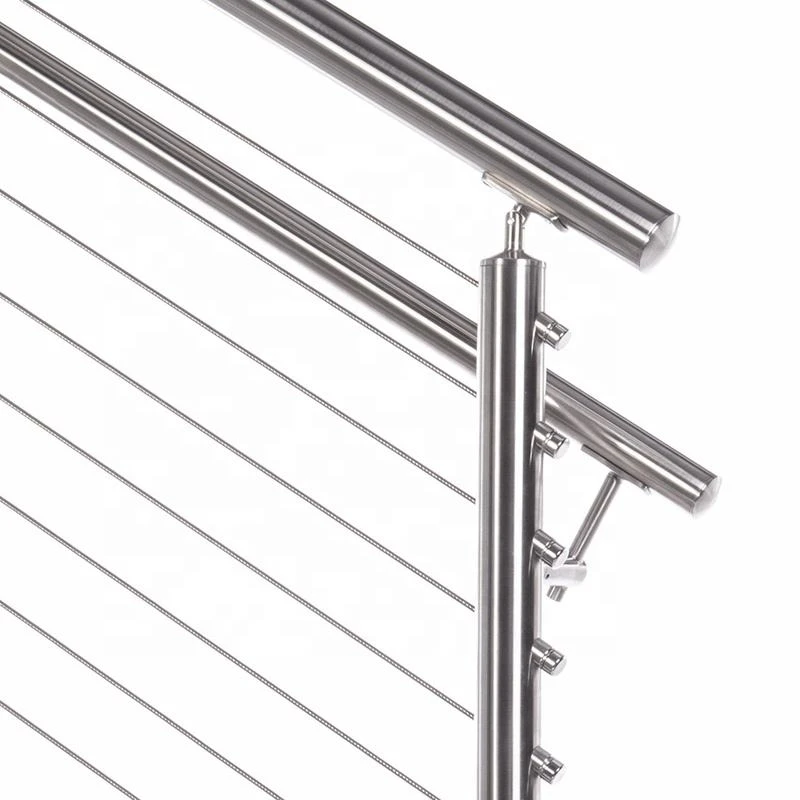
This is what separates a manufacturer from a reseller, and why most cable orders start with a drawing rather than a SKU. With in-house post fabrication, cable cutting and swaging, and engineering we deliver: cut-to-length 6063-T6 or steel posts with pre-drilled cable holes; 316 1×19 cable in 1/8 / 5/32 / 3/16 / 1/4 in; swaged or threaded fittings and turnbuckles bagged per run; CAD and shop drawings with a post map, cable count, tension values and deflection notes; PE-stamp support where sealed calculations are required; and a coated post section with tensioned sample cable for verification before a full order.
For the contractor or procurement buyer the practical meaning is simple: send the run length, post positions, height and substrate, and get back a quote with post map, cable count and lengths, tensioner list and lead time — usually within two business days. The system arrives as a kit that fits the building.
How to Choose the Right Cable Railing
1.Horizontal or vertical?
Horizontal for the clean modern look; vertical where climbability is restricted locally or for family/pool decks — see Vertical Cable Railing.
2.What frame metal?
Aluminum (cost, color), steel (stiffness), or full 316 stainless (coastal, premium) — see Metal Cable Railing.
3.What environment?
Inland → 304 acceptable, 316 still recommended; coastal / pool / high-UV → 316 hardware and 2605 frames everywhere.
4.What cable spec?
1/8 in max view; 3/16 in residential default; 1/4 in commercial/long spans; 1×19 construction; 316 grade.
5.What application?
Deck → Steel Cable Deck Railing; aluminum-framed → Horizontal Aluminum Cable Railing; complete stainless → Stainless Steel Cable Railing Systems for Decks.
6.Stairs?
Budget for a separate graspable round handrail.
Install Overview
Three mounts cover nearly every substrate. Surface / base-plate mount (posts bolted to the deck) is simplest and needs blocking under the deck at each post. Fascia mount (posts on the deck edge) clears the floor for balconies. Core-drilled / side-mount clamps posts into a floor channel or wall. Into wood, through-bolt with backing; into concrete, chemical or expansion anchors into ≥4 in of sound material. Cable is then run, tensioned with turnbuckles, and the tension verified line by line.
Maintenance & Life Cycle
Cable is not "fit and forget" — tension is what holds the 4-inch gap closed, so it is set and watched. Pull to ~200 lb per run; inspect monthly through the first season (new cable settles), then annually; re-tension every 1–2 years as the line takes a slight permanent set. Clean with mild soap and water; avoid steel wool or chloride cleaners that pit the surface. The metal posts and 316 hardware are near-zero maintenance; over a 20–30 year life the structure outlasts the building's other finishes.
Frequently Asked Questions
Q: What is the difference between 1×19 and 7×19 cable?
A: 1×19 is a single 19-wire strand — rigid, with almost no stretch, so it holds a straight line between posts and is the standard for railing. 7×19 is far more flexible and meant for moving rigging, not a static guard; it deflects too much for a code-clean cable rail. If a supplier quotes 7×19 for a guard, expect wider post spacing to compensate.
Q: How tight should cable railing be?
A: Each line is pulled to roughly 200 lb per run using a turnbuckle — not just hand-tight. That tension keeps the gap under 4 inches even when someone pushes on the cable. Check monthly through the first season, then annually, and re-tension every 1–2 years as the line takes a slight permanent set.
Q: Do I need 316 stainless cable?
A: For any outdoor or coastal site, yes — 316 is the marine-grade standard and resists the salt-air corrosion that destroys 304. Within roughly 10 miles of salt water, 316 is not optional. 304 is acceptable only for dry, interior runs. Pool and oceanfront projects should default to 316 hardware throughout, not just the cable.
Q: What cable diameter should I specify?
A: 3/16 inch is the residential default — about 4,200 lb break, thin enough to nearly disappear, stiff enough for normal spans. Use 1/8 inch only for low-traffic or non-code runs where maximum view matters; step up to 1/4 inch for commercial, long spans or high-abuse areas where stiffness allows wider post spacing.
Q: Does cable railing actually pass the 4-inch sphere rule?
A: Yes — when designed for deflection, not just static gap. Cables are spaced about 3 inches on center and tensioned, so even under the 200 lb point load the opening stays under 4 inches. A slack or over-spanned run can fail the test, which is why post spacing and tension are specified, not guessed. The run-specific post map is worked out on our horizontal and vertical cable pages.
Q: Is the "ladder effect" a real code problem?
A: National model codes do not ban horizontal cable infill, and an ICC technical committee found no data justifying a climbability restriction. A few municipalities amend locally to restrict it, so confirm with your building department. Where horizontal is banned, our vertical cable orientation removes the ladder effect entirely.
Q: Can cable railing be used on stairs?
A: Yes, and it looks excellent on stair runs. The rule to respect is the graspable handrail: a flat top rail or 2×4 cap is not code-compliant on stairs, so you need a separate round handrail of 1¼–2 inches diameter, continuous with end returns. We design stair cable with that compliant handrail alongside the guard.
Q:Aluminum or steel frame — which should I choose?
A: Aluminum (6063-T6, powder-coated) is lighter, colorable and corrosion-resistant — the value choice for most decks. Steel is stiffer for the widest spans and lower material cost but heavier and needs more coating care. Full 316 stainless is the premium, near-zero-maintenance, coastal answer. The trade-offs are detailed on Metal Cable Railing.
Q: What is the typical MOQ and lead time?
A: Made-to-order; MOQ and lead time depend on frame metal, cable spec, color and volume — send the layout and we quote, usually within two business days.
Q: Do you provide engineering drawings and PE stamp?
A: Yes — CAD / shop drawings, a post map with cable count and tension values, and load-and-deflection notes, with PE-stamp support where the jurisdiction requires sealed calculations, to IBC, IRC, BS 6180 or AS/NZS.
ZP Aluminum Co., Ltd. is one of the most professional cable railing manufacturers and suppliers in China. With abundant experience, we warmly welcome you to wholesale customized cable railing made in China here from our factory. If you have any enquiry about quotation, please feel free to email us.