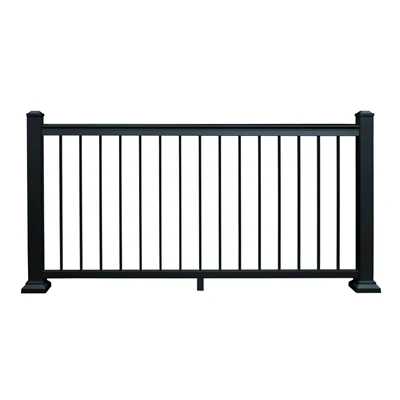
Stainless Steel Railing Manufacturer
— Custom-Engineered Guardrail, Balustrade & Handrail Systems for Coastal, Marine & Architectural Projects
The complete category guide to stainless steel railing: what 316 vs 304 vs 316L actually buys you, why molybdenum is the whole game near chlorides, #4 brushed / #8 mirror / bead-blasted finishes, TIG-welded fabrication, the glass-balustrade / cable / handrail family, galvanic isolation and IBC / BS 6180 load math — and how a made-to-spec manufacturer turns a layout into a welded, drawn and code-documented system that outlasts the building.

ZP Railing is a stainless and aluminum railing manufacturer that engineers and fabricates guardrail, balustrade and handrail systems in 316, 304 and 316L stainless for contractors, architects, engineers and project specifiers worldwide. We are not a reseller moving catalog kits — every system is built around project-specific dimensions, from in-house tube cutting, forming and TIG welding through toughened-laminated glass, swaged 316 cable and PE-stampable shop drawings, crated against your bill of materials.
A stainless railing is specified when the site itself is hostile — salt air, pool chlorine, humidity, or a hygiene code that will not accept a painted finish wearing through in a decade. Our engineering team turns your drawings into shop drawings and load-and-deflection calculations to IBC, IRC, BS 6180 or AS/NZS 1170 where applicable, supports PE stamping for permitting, and resolves the details that off-the-shelf kits ignore — grade selection by environment, galvanic isolation at stainless-to-aluminum junctions, weld integrity on long monocoque runs, and anchor design into concrete, steel or timber. When a balcony, marina, pool deck or staircase calls for a real-metal guard that survives the environment, we fabricate to that specification instead of asking you to redesign around a standard profile.
Looking for a specific stainless product?
- Stainless-framed glass balustrade & 316 vs 304? See Stainless Steel Glass Balustrade.
- Complete 316/304 stainless cable system for a deck? See Stainless Steel Cable Railing Systems for Decks.
- Buy stainless deck cable by the meter / fittings only? See Stainless Steel Deck Cable.
- Stainless handrail for outdoor steps (wall or post mount)? See Stainless Steel Handrails for Outdoor Steps.
- Comparing materials across all four categories? See Deck Railing System.
-
![Stainless Steel Handrails For Outdoor Steps]() Stainless Steel Handrails For Outdoor StepsMost "handrail" listings sell a length of tube. For outdoor steps the real job is different: the rail has to match your stair angle, stay graspable in the wet, and prove its fixings hold when...view more
Stainless Steel Handrails For Outdoor StepsMost "handrail" listings sell a length of tube. For outdoor steps the real job is different: the rail has to match your stair angle, stay graspable in the wet, and prove its fixings hold when...view more -
![Stainless Steel Glass Balustrade]() Stainless Steel Glass BalustradeMost "glass balustrade" listings show an aluminum frame or a frameless spigot run. A stainless steel glass balustrade means the load-bearing frame — posts, top rail, clamps and bolts — is...view more
Stainless Steel Glass BalustradeMost "glass balustrade" listings show an aluminum frame or a frameless spigot run. A stainless steel glass balustrade means the load-bearing frame — posts, top rail, clamps and bolts — is...view more -
![Stainless Steel Cable Railing Systems For Decks]() Stainless Steel Cable Railing Systems For DecksMost "stainless cable railing" listings ship an aluminum frame with a stainless cable and call it stainless. A genuine stainless steel cable railing system for decks means every load path — posts,...view more
Stainless Steel Cable Railing Systems For DecksMost "stainless cable railing" listings ship an aluminum frame with a stainless cable and call it stainless. A genuine stainless steel cable railing system for decks means every load path — posts,...view more -
![Aluminum Picket Railing]() Aluminum Picket RailingA Practical Railing Solution Built for Everyday Useview more
Aluminum Picket RailingA Practical Railing Solution Built for Everyday Useview more
Not every project requires glass panels or cable systems.
For many residential communities, apartment developments and commercial... -
![Metal Deck Railing Pickets]() Metal Deck Railing PicketsHe Building Blocks of a Durable Deck Railing Systemview more
Metal Deck Railing PicketsHe Building Blocks of a Durable Deck Railing Systemview more
While complete railing systems often receive the most attention, the pickets themselves play an important role in both safety and... -
![Stainless Steel Deck Railing]() Stainless Steel Deck RailingDurable Railing Solutions Built for Demanding Outdoor Environmentsview more
Stainless Steel Deck RailingDurable Railing Solutions Built for Demanding Outdoor Environmentsview more
Stainless steel deck railing systems are widely specified for projects that require long-term durability, structural... -
![Stainless Steel and Glass Balustrade]() Stainless Steel and Glass BalustradeCombining Transparency, Strength and Architectural Eleganceview more
Stainless Steel and Glass BalustradeCombining Transparency, Strength and Architectural Eleganceview more
Modern building projects increasingly demand balustrade systems that contribute to both safety and architectural... -
![Stainless Steel Railing Systems]() Stainless Steel Railing SystemsEngineered Railing Solutions for Modern Building Projectsview more
Stainless Steel Railing SystemsEngineered Railing Solutions for Modern Building Projectsview more
Selecting a railing system is rarely just about choosing a material.
For architects, developers and contractors, the decision...


What Is a Stainless Steel Railing

A stainless steel railing is a guardrail, balustrade or handrail whose structural metal — posts, top rail, infill frames, clamps and bolts — is austenitic stainless steel rather than aluminum, carbon steel or wood. The distinction matters because stainless is the only common railing metal that resists chloride corrosion from the inside out: its chromium forms a passive oxide film that heals itself, and in 316 grade a molybdenum addition stands up to salt spray and pool chlorine that destroy ordinary steel in seasons.
Two facts frame the entire category. First, "stainless" is a grade, not a promise — 304 and 316 are both "stainless," but only 316 carries the molybdenum that survives a coastal or poolside site. A balustrade is only as durable as its weakest metal, so the honest specification grades the posts, clamps and bolts together, not just the visible line. Second, stainless is fabricated, not assembled from catalog stock — posts are cut, formed and TIG-welded, glass is laminated to order, cable is swaged to length. That is why a manufacturer serves coastal apartments, marinas, food plants and luxury architectural balconies from one material family simply by changing the grade, the finish and the infill.
Stainless Steel Railing vs the Other Three Categories
The fastest way to place stainless is a side-by-side with the other three top-level categories. The full material breakdown lives on our deck railing system comparison.
| Item | Stainless Steel | Aluminum | Glass | Cable |
| Corrosion resistance | Excellent (316 in chlorides) | Excellent with coating | N/A (glass); frame-dependent | Frame-dependent; 316 cable excellent |
| View | Partial (metal frame) | Partial | Uninterrupted | Open, nearly invisible |
| Weight | Medium-heavy | Light | Heavy | Light |
| Maintenance | Near-zero | Near-zero | Cleaning | Cable tension check |
| Hygiene/cleanability | Best (non-porous) | Good | Good | Good |
| Cost | High | Low-medium | High | Medium |
| Best use | Coastal, marine, pool, food, architectural | Decks, commercial, budget | View decks, balconies, pools | View decks, modern, minial |
Stainless wins where the environment is the enemy — salt water, chlorine, humidity, or a hygiene code — and where the architect wants a real-metal line that never needs repainting. It loses on first cost to aluminum and on uninterrupted view to glass; there, see our aluminum, glass and cable families.
Why Specifiers Choose Stainless
- It survives the site.
316 stainless shrugs off salt air and pool chlorine that pit 304 and rot painted steel in a few seasons. For a balcony within ten miles of the coast, stainless is not a luxury — it is the spec that avoids a teardown.
- It stays metallic, not painted.
Powder coat can scratch to bare metal; stainless finishes are the metal itself, field-refreshable with a scotch-brite pass. Decades later it still reads as one engineered element.
- It is cleanable and code-clean for hygiene.
Non-porous, smooth-welded stainless is the default in food, pharmaceutical and healthcare settings where a railing must be wash-down cleanable.
- It carries a real load and looks the part.
TIG-welded monocoque corners and a brushed or mirror finish read as architectural, not utilitarian — which is why luxury homes and rooftop terraces spec it even inland.
- Life-cycle cost beats the sticker.
Higher first cost, near-zero maintenance, no repaint, no pitting. Over a 25–40 year building life the total cost often undercuts "cheaper" metals that need recoating.
The Material — 316 vs 304 vs 316L
This is the decision that decides whether a stainless railing lasts thirty years or three. Both 304 and 316 are austenitic (18/8 family) stainless; the difference is one alloying element.
| Factor | 304 stainless | 316 stainless | 316L stainless |
| Alloy | 18% Cr, 8% Ni | 16% Cr, 10% Ni, 2–3% Mo | 316 + low carbon (<0.03%) |
| Chloride resistance | Moderate — pits near pool / salt | High — Mo resists chloride pitting | High — Mo + weld-safe |
| Coastal (salt air) | Tea-stains within ~1-2 mi | Baseline within ~10 mi of salt water | Baseline within ~10 mi |
| Poolside (chlorine) | Not recommended | Recommended | Recommended |
| Welding | Fine, but carbide risk at welds | Fine | Best for heavy welded sections |
| PREN (rough index) | ~18-20 | ~24-28 | ~24-28 |
| Price | Baseline | +15-30% over 304 | +20-35% over 304 |
| Best use | Dry, inland, low humidity | Coastal, pool, marina, humid | Heavy welded coastal structures |
The molybdenum in 316 is the whole story. Salt spray and pool chlorine are both chloride exposures, and chlorides are exactly what cause pitting and crevice corrosion in stainless that lacks molybdenum. A common rough index, the Pitting Resistance Equivalent Number (PREN = %Cr + 3.3×%Mo + 16×%N), lands 304 around 18–20 and 316 around 24–28 — the higher the number, the more chloride it tolerates. For any railing within roughly ten miles of the coast, or anywhere around a chlorinated pool, we default the whole frame to 316, glass clamps and bolts included.
316L is the low-carbon version of 316. Its carbon stays under 0.03%, which prevents chromium-carbide precipitation in the heat-affected zone of welds — so on heavily welded coastal structures it keeps full corrosion resistance right at the seam without a post-weld heat treatment. Where we TIG-weld long monocoque runs for a marina or rooftop, 316L (or 316 welded with care) is the honest choice.
Finishes — Brushed, Mirror or Bead-Blasted

The finish is as much an aesthetic call as a corrosion one, and unlike paint it cannot "wear through":
- #4 brushed (satin).
The default for balustrades — a directional grain that hides water spotting and fingerprints, low-glare in sun. Most residential and commercial runs spec this.
- #8 mirror (polished).
A showpiece finish for architectural balconies and luxury poolside; reflects the view but shows water marks and needs more upkeep.
- Bead-blasted / satin-matte.
A soft, non-directional finish between the two — popular on contemporary rooftop terraces.
A brushed surface can be field-refreshed with a scotch-brite pass, which is part of why stainless ages better on an exposed balcony than any coated metal.
The Family of Stainless Steel Railing Systems
Each system below shares the same stainless metallurgy and differs in infill and application — which is why one material family serves very different buyers.

01
Stainless-framed glass balustrade
316/304 posts and top rail carrying toughened-laminated glass — the premium all-metal framed glass option.
Full page: Stainless Steel Glass Balustrade.

02
Complete 316/304 stainless cable system for decks
Posts, rails and hardware all stainless — the coastal-grade cable answer.
Full page: Stainless Steel Cable Railing Systems for Decks.

03
Stainless deck cable (component / sourcing)
Buy 316 cable by the meter with fittings and swage — for contractors assembling their own runs.
Full page: Stainless Steel Deck Cable.

04
Stainless handrails for outdoor steps
Wall- or post-mounted graspable stair rail in 316/304, bent to your exact angle.
Full page: Stainless Steel Handrails for Outdoor Steps.
Types by Application

Coastal apartments and boardwalks
Salt-laden air within miles of the water; 316 end to end.

Marina and dock edges
Direct salt-water contact; 316 with periodic fresh rinse.

Poolside balconies & rooftop pools
Chlorinated splash; 316 frame and clamps.

Food, pharmaceutical and healthcare
Non-porous, wash-down cleanable welded stainless; hygiene code drives the spec.

Architectural / luxury homes
Where the all-metal line is the design intent, not just the code.

Stairs and ramps
Stainless handrails (often paired with a guard) on the exact stair angle, with code-compliant returns.
Engineering a Stainless Guard — Loads, Spacing & Deflection
- Concentrated load. 200 lb (0.89 kN) at any point along the top edge, any direction.
- Uniform horizontal load. 50 plf (0.73 kN/m) along the top edge.
- Sphere rule. No 4″ (100 mm) sphere passes, including the gap under the panel.
- Guard heights. 36″ (914 mm) residential · 42″ (1067 mm) IBC / commercial · 48″ (1200 mm) pool.
- Handrail height. 34–38″ (865–965 mm) graspable, with end returns.
- Deflection. System within roughly L/60 under load.
- Code. IBC 1015 / IRC R312 (USA) · BS 6180 (UK) · EN 1991 (EU) · AS/NZS 1170 (AU/NZ).
- Galvanic isolation. Stainless-to-aluminum / steel contacts isolated with dielectric sleeves; 316 hardware throughout.
We issue CAD / shop drawings and load-and-deflection notes, with PE-stamp support where the jurisdiction requires sealed calculations, to IBC, IRC, BS 6180, EN 1991 or AS/NZS. The IBC framework is published by the International Code Council.
Fabrication — Welded, Not Bolted Together

Stainless railing is made, not merely assembled. In our plant:
- Posts, top rails and bar are cut from 316/304 tube and bar stock to your dimensions.
- Corners and stair flights are TIG-welded into a monocoque line, then drilled to your infill count — a seamless element mechanical joints cannot match.
- Glass is toughened and laminated in-house to the build-up your load calls for (13.5 / 17.5 / 21.5 mm, PVB or SGP).
- Cable is cut, end-swaged and bagged per run to the length your layout dictates.
That vertical capability — metal, glass and cable under one roof — is why a single manufacturer can ship a stainless glass balustrade, a stainless cable system and a stainless stair handrail that all match grade-for-grade and finish-for-finish.
Marine & Coastal Stainless Railing
Salt and chlorine attack the metal, not the metallurgy — if the grade is 316. The specification response: 316 posts, rails, clamps and bolts end to end; marine-grade stainless with full passivation; drainage so water cannot pool at bases; and documented salt-spray testing to ASTM B117 (astm.org) where the project demands proof. The stainless steel cable systems for decks and stainless steel glass balustrade pages cover the system decisions in detail.
Customization & Made-to-Spec Manufacturing

This is what separates a manufacturer from a reseller, and why most stainless orders start with a drawing rather than a SKU. With in-house tube cutting, forming and TIG welding, glass lamination and cable swaging, we deliver: cut-to-length 316/304 posts and rails with pre-set infill; toughened-laminated glass to 13.5 / 17.5 / 21.5 mm (PVB or SGP); 316 1×19 cable in 1/8 / 5/32 / 3/16 in, swaged to length; CAD and shop drawings with a post map, infill count, load and deflection notes; PE-stamp support where sealed calculations are required; and a welded post section with the specified finish for verification before a full order.
For the contractor or procurement buyer the practical meaning is simple: send the run length, post positions, height and substrate, and get back a quote with post map, infill count and lengths, hardware list and lead time — usually within two business days. The system arrives as a kit that fits the building.
How to Choose the Right Stainless Railing
What grade?
316 for coastal / pool / marine / humid; 304 only for dry inland low-humidity; 316L for heavily welded coastal structures.
What infill?
Glass (Stainless Steel Glass Balustrade), cable (Stainless Steel Cable Railing Systems for Decks), or handrail-only (Stainless Steel Handrails for Outdoor Steps).
What finish?
#4 brushed for almost everything; #8 mirror for showpiece; bead-blasted for soft matte.
What application?
Balcony / pool / marina / stair / food plant — each covered by the matching product page.
Stairs?
Budget a separate graspable round handrail (1¼–2 in, with returns); the flat top rail of a guard is not enough.
Mixed metals?
Tell us so we isolate stainless-to-aluminum or stainless-to-steel interfaces with dielectric sleeves.
Installation Overview
Stainless posts mount the same ways as any framed post — surface / base-plate (bolted to the slab, needs backing under the deck), fascia (on the deck edge, clears the floor), or core-drilled / side-mount (into a floor channel or wall). The stainless difference: the frame is heavier than aluminum, so the backing matters more — under every surface post we call for a stiffened substrate; fascia posts need a reinforced rim. Into concrete, chemical or expansion anchors into ≥4 in of sound material; into steel, weld or bolting through a gusset. Because stainless is noble, we isolate it from aluminum or carbon-steel structure at every contact.
Maintenance & Life Cycle
Stainless is near-zero maintenance by design, but not "ignore it." For marine and pool sites a periodic fresh-water rinse removes chloride film before it can initiate pitting. Clean with mild soap and water; avoid steel wool or chloride cleaners that contaminate the surface with iron. The metal is otherwise fit-and-forget for decades; over a 25–40 year life the structure typically outlasts the building's other finishes. Cable infill (where used) needs periodic tension checks — pulled to ~200 lb per run and re-tensioned every 1–2 years as the line takes a slight permanent set.
Frequently Asked Questions
Q: Is 316 really necessary, or is 304 enough for a stainless railing?
A: It follows the environment. Within about ten miles of salt water, or anywhere around a chlorinated pool, 316 is the baseline — its molybdenum resists the chloride pitting that destroys 304. Dry, inland, low-humidity sites can run 304 and look good for years. We tell you the grade your site needs rather than defaulting everyone to the expensive option.
Q: Will a stainless railing rust outside?
A: Properly graded stainless does not "rust" in the normal sense — 316 shrugs off salt and chlorine that would pit 304. What looks like rust is usually tea-staining (surface discoloration from chlorides or mixed metals) or iron contamination from steel tools during install. We ship 316 for corrosive sites, isolate dissimilar contacts, and recommend a fresh-water rinse for marina balconies, so the frame stays metallic, not orange.
Q: What is the difference between 316 and 316L?
A: 316L is the low-carbon version of 316 (carbon under 0.03%). On heavily welded coastal structures, that low carbon prevents chromium-carbide precipitation in the weld heat-affected zone, keeping full corrosion resistance right at the seam without post-weld heat treatment. For long TIG-welded monocoque runs we prefer 316L or weld 316 with care.
Q: Can I mix stainless with an aluminum deck or post to save cost?
A: You can, but where stainless meets aluminum you get galvanic corrosion unless the junction is isolated with a dielectric sleeve or non-conductive grommet. If you go that route we isolate every contact point and still spec 316 for the frame and hardware. A full stainless frame avoids the issue entirely, which is why we recommend it for coastal and poolside sites.
Q: Brushed or mirror finish for an outdoor balustrade?
A: Brushed (#4 satin) for almost every balcony — it hides water spots and glare and field-refreshes with a scotch-brite pass. Mirror (#8) is a showpiece for luxury poolside or architectural balconies but shows water marks and needs more care. Bead-blasted sits between them. Finish choice is aesthetic; corrosion resistance comes from the grade, not the polish.
Q: How much more does stainless cost vs aluminum?
A: A complete 316 stainless-framed system typically runs 25–60% above a comparable powder-coated aluminum frame, driven by material cost and the heavier backing it needs. 304 closes some of that gap. For coastal, poolside and architectural sites the premium buys decades of no repaint and no pitting; for a dry inland site the aluminum route is often the better value. We quote both so you can weigh it against your site.
Q: Do you provide engineering drawings and PE stamp?
A: Yes — CAD / shop drawings, a post map with infill count and load values, and load-and-deflection notes, with PE-stamp support where the jurisdiction requires sealed calculations, to IBC, IRC, BS 6180, EN 1991 or AS/NZS. Tell us the jurisdiction when you request a quote so we match the right standard.
Q: Is stainless suitable for food or pharmaceutical sites?
A: Yes — non-porous, smooth-welded stainless is the default where a railing must be wash-down cleanable and meet hygiene codes. This is a reason aluminum and wood often cannot substitute in food, pharma and healthcare settings.
Q: What glass goes in a stainless-framed balustrade?
A: Toughened-laminated safety glass — 13.5 / 17.5 / 21.5 mm, PVB or SGP interlayer — so a broken panel stays captured instead of dropping. Because the stainless top rail carries the line load, framed runs can use thinner glass than a frameless run.
Q: What is the typical MOQ and lead time?
A: Made-to-order; MOQ and lead time depend on grade, finish, infill and volume — send the layout and we quote, usually within two business days.
Get a Quote
Send the run length and post positions, the required height (36 / 42 / 48 in or metric), the grade (316 / 304 / 316L), the finish (#4 / #8 / bead-blasted), the infill (glass, cable or handrail-only), and the environment (inland, coastal or pool). We return a quote with post map, infill count and lengths, hardware list, lead time and — where needed — sealed calculations. A welded post section in your chosen finish is available so you can verify before a full order.
ZP Aluminum Co., Ltd. is one of the most professional stainless steel railing manufacturers and suppliers in China. With abundant experience, we warmly welcome you to wholesale customized stainless steel railing made in China here from our factory. If you have any enquiry about quotation, please feel free to email us.