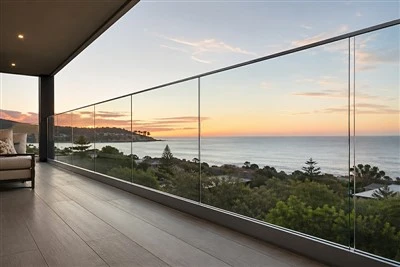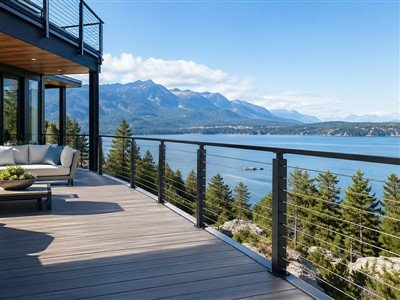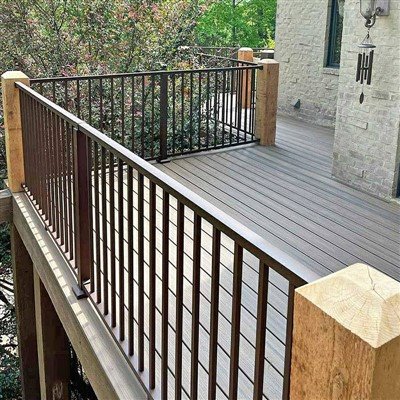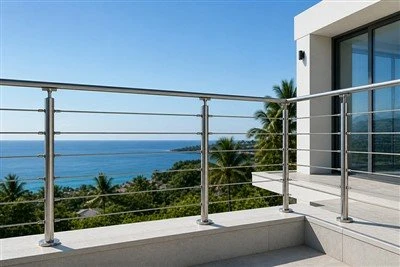
ZP Aluminum Co., Ltd. is one of the most reliable manufacturers and suppliers of steel cable railing in China. If you're going to buy bulk high quality steel cable railing made in China, welcome to get quotation from our factory. We also accept customized orders.
Steel Cable Railing - The Lightest Barrier You Can Build
Cable infill is the most open guard you can specify: thin stainless lines instead of pickets or glass, near-total view-through, and a clean industrial look. The catch is that cable flexes - and that single fact drives every code decision on post spacing and tension. Get that right and cable is unbeatable; get it wrong and an inspector's thumb opens a 4-inch gap.

Why Specifiers Reach for Cable
Cable earns its place wherever the barrier should disappear. Three reasons it beats pickets and glass for the right project:
View-through
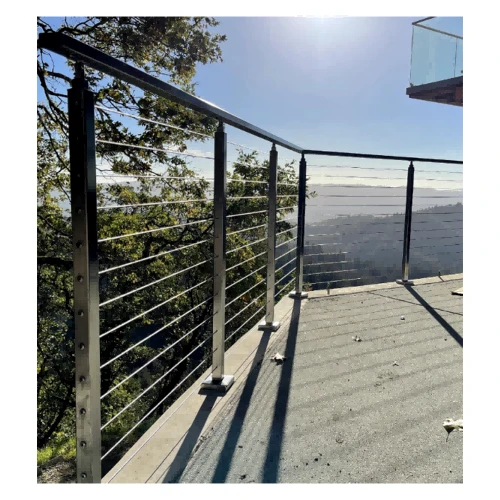
At 1/8–3/16 in, the lines almost vanish from a few feet away - ideal for waterfront decks, hillside terraces and restaurant fronts where the sightline is the asset.
Light and fast
No heavy glass, no dense picket field. Cable runs install quickly and keep the structure light, which matters on existing decks and rooftops.
Modern, linear look
The horizontal-line language reads "architectural" and pairs with both wood and metal posts, so it fits contemporary and transitional builds.
The trade-off is the one above: cable is the only common infill that moves under load, and that movement is exactly what building code tests for.
What Actually Makes Up a Cable Railing
- End posts. The anchored terminals that take the full tension of every run. These must be rigid - steel or heavy aluminum - because all cable pull loads land here.
- Intermediate posts (or braces). Lighter members between ends that simply stop the cable from bowing. Spacing them correctly is the whole deflection game (next section).

- Top rail. A round aluminum/steel tube or a wood cap. It ties posts together and, on level runs, can serve as the graspable handrail if it meets the diameter rule.
- Cable. Horizontal 1×19 stainless lines, typically 1/8–1/4 in, tensioned between fittings.
- Fittings & tensioners. Swaged ends, threaded studs and turnbuckles that let you pull each line to spec and re-tighten later. This is the hardware that makes cable a system rather than a string.
Choosing Cable Diameter & Construction
Not all cable is equal. Construction matters as much as thickness:
| Specification | What to know | When to use it |
| 1/8″ (3.2 mm) | Lightest, most invisible. Lower break strength (~1,780 lb, 1×19 316) and more deflection. | Low-traffic residential runs where code allows; maximum view. |
| 3/16″ (4.8 mm) | The residential default. ~4,000 lb break, good stiffness, still thin. | Most homes, decks and balconies. |
| 1/4″ (6.4 mm) | Stiffer, ~6,900 lb break, allows 4–5 ft post spacing. | Commercial, long spans, high-abuse areas. |
| 1×19 construction | Single 19-wire strand - rigid, minimal stretch. Preferred for railing. | Every horizontal run; resists bowing between posts. |
| 7×7 / 7×19 | More flexible, easier to coil, but deflects more. | Rarely for horizontal; only if a specific fitting demands it. |
| 316 stainless | Marine grade - the exterior/coastal standard. | Any outdoor or salt-air site. 304 only for dry, interior use. |
Tensioning & The Maintenance Reality
Cable is not "fit and forget." Tension is what keeps the 4-inch gap closed, so it has to be set and watched:
- Pull to spec. Lines tensioned to roughly 200 lb per run with a proper turnbuckle, not hand-tight.
- Check early, then yearly. Inspect monthly for the first season (new cable settles), then annually. Re-tension every 1–2 years as the line takes a slight permanent set.
- Clean, don't abrade. Mild soap and water; avoid steel wool or chloride cleaners that pit the surface.


The "ladder effect" worry - that horizontal cables invite kids to climb - is worth a line. National model codes do not ban horizontal infill; an ICC technical committee found no data justifying a climbability restriction, and falls from horizontal guards are statistically rare. A few municipalities still amend locally, so confirm before specifying. Where it is restricted, we supply a vertical-cable variant.
Wood Posts vs Metal Posts
Two build paths, two rigidity profiles:
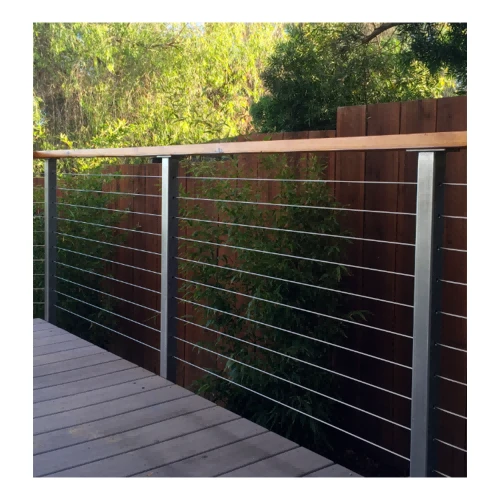
- Wood posts (DIY-friendly). A popular look - wood posts with a wood top rail and surface-mounted cable fittings. Works, but wood flexes, so posts must be beefier and closer, and the top rail will not meet stair-handrail graspability rules without a separate round rail.
- Metal posts (our standard). 6063-T6 aluminum or steel posts, powder-coated, hold tension without movement and let you hit wider, code-clean spacing. Best where the system has to pass inspection first time.
For a supply-only or contract install, we cut metal posts to length with pre-drilled cable holes and supplied tensioners, so the field work is assembly, not fabrication.
Cable on Stairs & the Graspable Handrail Rule
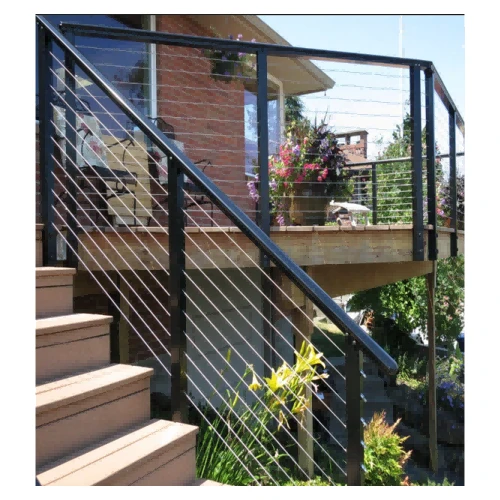
Cable runs on stairs are allowed and look excellent, but the handrail rule bites here: a flat top rail or a 2×4 cap is not graspable by code. On stairs you need a separate round handrail of 1¼–2 in diameter, continuous, with returns at the ends. We design stair runs with that compliant handrail alongside the cable guard, and angle the cable pitch to match the stringer.
| Parameter | Cable standard |
| Cable | 316 stainless, 1×19; 1/8″ / 3/16″ / 1/4″ |
| Vertical spacing | ~3 in on center (keeps < 4 in sphere under load) |
| Intermediate spacing | ≤ 42 in for 1×19 (3–4 ft residential, 4–5 ft at 1/4″) |
| Guard height | 36 in residential · 42 in IBC / commercial · 42 in in CA |
| Load | 200 lb concentrated · 50 lb/ft uniform · 50 lb/sq ft infill |
| Tension | ~200 lb per line; check season 1, then annually |
| Posts | 6063-T6 aluminum or steel, AAMA 2604 powder coat |
| Stair handrail | Separate round rail 1¼–2 in dia, graspable, returned |
| Hardware | 316 stainless for coastal & pool sites |
Built to Your Drawing
Cable is the most spacing-sensitive system we make, so we engineer it rather than ship a kit. Send the run lengths, post positions, heights and substrate; we return a panel/post schedule, the cable count and lengths, tensioner list, and deflection notes your inspector will ask for.
- Direct from the factory. Mill pricing on aluminum/steel posts and 316 cable - no distributor markup.
- Engineering notes. Post-spacing and tension values documented for code submission; PE stamp where the jurisdiction requires it.
- Mix the look. Aluminum posts with wood top rail, full metal, or hybrid - finish in standard or custom RAL; coastal orders get 316 hardware by default.
- Shipped worldwide. Cut-to-length posts crated with fittings bagged per run; small-batch and container loads supported.
Send your layout and we quote posts, cable, fittings and freight in one line - usually within two business days.
Frequently Asked Questions
Q: How tight should cable railing be?
A: Each line is pulled to roughly 200 lb per run using a turnbuckle - not just hand-tight. That tension is what keeps the gap under 4 inches even when someone pushes on the cable. Check monthly through the first season, then annually, and re-tension every 1–2 years as the line takes a slight permanent set.
Q: How far apart can cable railing posts be?
A: For 1×19 cable, keep intermediate posts or braces no more than 42 inches apart. That short span is what limits deflection so a 4-inch sphere cannot pass under a 200 lb load. 3/16 inch cable typically runs 3–4 ft between supports; 1/4 inch can reach 4–5 ft because it is stiffer.
Q: Does cable railing actually pass the 4-inch sphere rule?
A: Yes - when designed for deflection, not just static gap. Cables are spaced about 3 inches on center and tensioned, so even under the 200 lb point load the opening stays under 4 inches. A slack or over-spanned run can fail the thumb test, which is why post spacing and tension are specified, not guessed.
Q: Is the "ladder effect" a real code problem?
A: National model codes do not ban horizontal cable infill, and an ICC technical committee found no data justifying a climbability restriction - falls from such guards are statistically rare. A few municipalities amend locally to restrict it, so confirm with your building department. Where it is banned, we supply a vertical-cable variant.
Q: Can I build cable railing with wood posts?
A: Yes - wood posts with a wood top rail and surface cable fittings are a common look. The catch is that wood flexes, so posts need to be beefier and closer, and a flat wood cap will not meet stair-handrail graspability rules without a separate round rail. Metal posts hold tension without movement and give wider, code-clean spacing.
Q: Do I need 316 stainless cable?
A: For any outdoor or coastal site, yes - 316 is the marine-grade standard and resists the salt-air corrosion that destroys 304. 304 is acceptable only for dry, interior runs. Pool and oceanfront projects should default to 316 hardware throughout, not just the cable.
Q: Can cable railing be used on stairs?
A: Yes, and it looks excellent on stair runs. The rule to respect is the graspable handrail: a flat top rail or 2×4 cap is not code-compliant on stairs, so you need a separate round handrail of 1¼–2 inches diameter, continuous with end returns. We design stair cable with that compliant handrail alongside the guard.
Q: What cable diameter should I specify?
A: 3/16 inch is the residential default - about 4,000 lb break strength, thin enough to nearly disappear, stiff enough for normal spans. Use 1/8 inch only for low-traffic or non-code runs where maximum view matters; step up to 1/4 inch for commercial, long spans or high-abuse areas where stiffness allows wider post spacing.
Hot Tags: steel cable railing, China steel cable railing manufacturers, suppliers, factory, Aluminum Cable Railing System, Outdoor Aluminum Cable Railing, Outdoor Cable Railing, outdoor cable railing systems, outdoor deck cable railing systems, Residential Aluminum Cable Railing