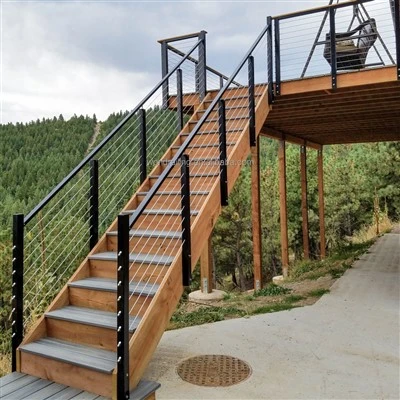
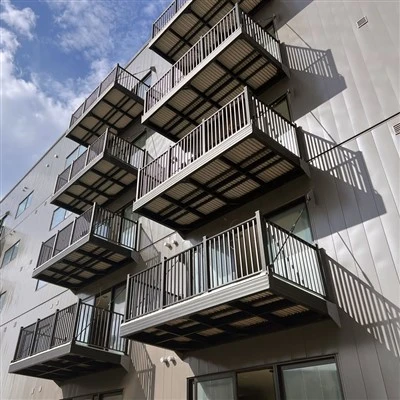
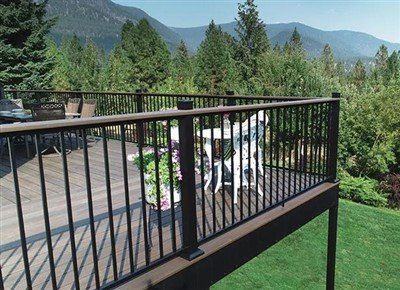
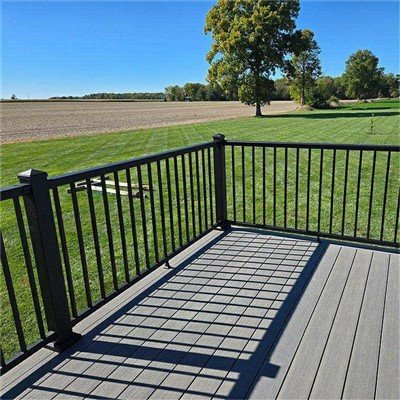
ZP Aluminum Co., Ltd. is one of the most reliable manufacturers and suppliers of aluminum deck balusters: powder-coated spindles for deck, stair & porch guardrails in China. If you're going to buy bulk high quality aluminum deck balusters: powder-coated spindles for deck, stair & porch guardrails made in China, welcome to get quotation from our factory. We also accept customized orders.
A baluster is the vertical member in a guardrail - the part you see and touch, and the part that decides whether a deck, porch or stair rail reads as finished or as a loose stick-built frame. We extrude 6063-T5/T6 aluminum balusters, powder-coat them in-house to AAMA 2604/2605, and ship them as a complete spindle kit - balusters, straight and stair connectors, screws - so you can refresh a tired wood rail or build a new aluminum/composite guard that will not rust, rot or ask for a paintbrush. This is the infill component, not the full guard; if you need the complete railing with posts and rails we link to it below.
Pick the right product
This page is the baluster / spindle - the vertical infill member for decks, stairs, porches and balconies, sold in packs that fit wood, composite or aluminum rails. It is a different purchase from a complete guard or a fence:
- Metal Railing with Pickets - the complete fall-protection guard system (top + bottom rail, posts, balusters, handrail) for decks, balconies and stairs.
- Aluminum Fence Pickets - a ground-level boundary / pool / pet fence, a different job (wind on a vertical sail, rackability over slopes, self-latching pool gate).
- Powder-Coated Aluminum Railing - the full aluminum railing system, our category anchor.
- Deck Railing System - the material-decision hub comparing aluminum, glass, cable and steel infill.

About aluminum baluster
Strip a guardrail back and it is four parts working as one: a continuous top rail (the line a hand finds), balusters carrying the infill between rails, a bottom rail closing the gap above the floor, and posts transferring the whole load into the deck or slab. The baluster is the infill member - mounted between the top and bottom rails, fixed at both ends, with no tension to maintain and no panel to clean.
That is the difference from a fence picket. A picket is part of a self-supporting boundary panel that carries its own wind load to the ground; a baluster is the vertical in a guard that lives between two rails and exists to close the 4-inch opening. Same word "spindle" gets used for both, which is exactly why buyers mix them up - but the engineering is different, and so is the product on this page.
Profiles and lengths: the part you may actually look at
The baluster sets the tone of the whole rail, so we run the common vocabularies and will mix them within one order:
Round 3/4″ (0.75″)
The volume choice, clean and classic; supplied smooth or with a fine textured surface that hides minor handling marks.
Square 3/4″
Contemporary and architectural, the default on modern decks and commercial balconies.
Face-mount rectangle / bow
Surface-mounted to the rail face with brackets instead of dropping through a bottom channel; a heavier, more ornamental read for heritage and hospitality work.
Hollow vs solid
Hollow sections are lighter and freight-friendly for export; solid reads heavier and resists a harder knock. Both are extruded 6063 and powder-coated identically.
Length is driven by the finished guard height, not by taste:
| Baluster length | Finished guard height | Notes |
| 26" | 36"(one-/tow-family, IRC R312) | Most common residential deck/stair |
| 32" | 42" (commercial/multifamily/pubilc, IBC 1015) | Schools, apartments, boardwalks |
| 29"/36" | Custom or transitional heights | Cut to your rail-cap thickness |
We cut to actual length, not nominal, and will run non-standard lengths if your drawing calls for them.
Finish: AAMA 2604 vs 2605, and why it matters
The powder coat is what keeps an aluminum baluster looking new for decades, so the spec is not a footnote. We apply a TGIC-polyester powder in a multi-stage line we run:
- AAMA 2604 - high-performance; the default for inland and mild-climate decks with a 15–20 year color-retention expectation.
- AAMA 2605 - superior, with PVDF-class weatherability; specify it for coastal, poolside and high-UV sites where fading and chalking are the real enemy.
- Textured vs smooth - textured finish masks small surface marks and pairs well with composite decking; smooth is the classic look on traditional homes.
- Color - matte black remains the most-requested because it hides soil and reads as deliberate on both modern and period elevations; bronze, brown and white are standard, and any RAL is available through our line.
- Coastal hardware - for salt-air sites we ship 316 stainless connectors and screws and confirm the coating to AAMA 2605, with salt-spray (ASTM B117) resistance built into the spec rather than hoped for.

The 4-inch sphere rule (this is the code that governs spacing)
Under IRC R312 and IBC 1015, no opening in a guard - including the gap between balusters - may let a 4″ sphere pass through, measured from the walking surface all the way to the top of the guard. Two details catch people out:
- The gap under the bottom rail counts.
The space between the decking and the bottom rail must also be ≤ 4″. We close it with a low-seated bottom rail, not by hoping the floor is tidy.
- Stairs get a small exception.
The triangular opening at the bottom of a stair guard may pass up to a 4⅜″ sphere (and some older IBC editions allow 6″ in that triangle only). The balusters themselves still land under 4″.
In practice we lay balusters at roughly 3.5–3.66″ on center, which leaves a clear gap comfortably under 4″ and reads as even, intentional spacing. If you are doing the layout yourself, that pitch is the number to hold - not a gap you leave to the installer to "eyeball."
Loads: what a baluster is and is not responsible for
A guard is a life-safety device, so the numbers are not suggestions. The baluster is infill, not the primary structure:
- Infill load: balusters must resist 50 lb applied over any 1 sq ft area (ASCE 7 / IBC 1607.8). Our extruded 3/4″ sections clear this with margin.
- Top-rail load: the 200 lb concentrated load and 50 lb per linear foot uniform load are carried by the top and bottom rails and the posts, not by the balusters. A baluster-only page is honest about this - the spindle is the detail, the rail-and-post system is the structure.
- Trigger: any walking surface more than 30″ above the grade or floor below needs a guard; height is 36″ residential, 42″ commercial unless the jurisdiction says otherwise (California and New York City require 42″ even on houses - we confirm before cutting).
Compatibility: drop-in for wood, composite or aluminum rails
Most baluster replacements fail at the connection, not the baluster. Ours are built to avoid that:
- Universal 3/4″ profile fits the standard top and bottom rail channels on wood, composite, vinyl and aluminum systems.
- Connectors included - straight for level runs and 30–35° angled for stairs, so a stair guard does not need field-bent balusters.
- Pre-drilled, no routing - balusters arrive with holes; you pin them with the supplied connectors and screws. A rebuild is a weekend job, not a workshop job.
- Face-mount option for rails without a bottom channel - the rectangle and bow profiles bolt to the rail face, which rescues older wood rails where routing a new bottom channel is not worth it.
- Kits, not loose sticks - each pack pairs balusters with the right count of straight + stair connectors and screws, plus a driver bit, so you are not short at the last post.

Aluminum balusters vs wood, steel and wrought iron
First cost is the wrong lens on an infill member you will look at every day:
| Material | Upkeep | Service life | Notes for a baluster |
| Aluminum | Rinse+occasional touch-up | 30+ yrs | No rust, light, color-stable, ships cheap |
| Wood | Sand, prime, paint every 2-3 yrs | 5-10 yrs | Rot at the bottom end, paint cracks, warps |
| Steel/wrought iron | Scrape+repaint on a cycle | 20-30 yrs(if maintained) | Rusts at every cut and weld; heavy on a roof deck |
| Composite(baluster) | Wash | 15-25 yrs | No rot, but limited profiles and a visible seam |
For export and for coastal jobs, aluminum is the default we ship - the no-rust story travels, the weight saves freight, and the powder coat holds color in sun and salt where wood and steel quietly fail.
Built in our plant, specified to your drawing
We are a railing-component manufacturer, not a trading desk reselling imported lengths. The aluminum is extruded, the powder coat is applied in a line we run, and balusters are cut, drilled and kitted in our own shop before they ship. That vertical control is what lets us take a rail sketch and return a complete schedule - baluster count per run, straight vs stair connector split, length per guard height, and the finish and color per elevation - instead of a price per stick and a shrug.


Every order runs through our engineering desk before it is cut: spacing against the 4″ rule, length against the finished guard height, finish against the coastal/UV exposure, and hardware grade against the site. You get a bill of materials you can hand to your installer or forward to the AHJ - and PE-stamp support on the full guard where the jurisdiction asks for it. OEM and ODM are routine: custom profiles, lengths, face-mount brackets, bow forms and any RAL color are handled at the plant.
Typical specification (component)
Alloy: 6063-T5 / T6 extruded aluminum, hollow .050–.090″ wall or solid
Profile: 3/4″ round or square; face-mount rectangle / bow optional
Length: 26″ (36″ guard) / 32″ (42″ guard) / 29″ / 36″ custom
Finish: TGIC polyester powder, AAMA 2604 (2605 coastal), textured or smooth
Color: matte black / bronze / brown / white / any RAL
Connectors: straight + 30–35° stair; 304 SS standard, 316 SS coastal
Spacing: built to < 4″ clear (IRC R312 / IBC 1015)
Pack: 10 / 100 / 101; bulk pallet for contractors
Coating test: ASTM B117 salt-spray (per finish spec)
Frequently asked questions
Will aluminum balusters fit my existing wood or composite deck rail?
In most cases yes. The 3/4″ profile drops into the standard top and bottom rail channels on wood, composite and vinyl systems, and we include straight and stair connectors plus screws. For older rails without a bottom channel, choose the face-mount rectangle or bow profile - those bolt to the rail face and need no routing.
How many balusters do I need?
Layout at roughly 3.5–3.66″ on center so the clear gap stays under 4″. A quick rule: baluster count ≈ (rail length ÷ spacing) + 1 per straight run, plus the stair-connector share for any sloped section. We supply pre-counted packs and can return an exact count from your dimensions.
What length for a 36″ vs 42″ guard?
26″ balusters for a 36″ finished guard, 32″ for a 42″ guard. The exact length also depends on your top- and bottom-rail cap thickness, so tell us the rail section and we size it - custom 29″ and 36″ lengths are routine.
Do aluminum balusters rust?
No. Aluminum forms its own oxide skin and does not rust; the powder coat seals it further. For coastal or poolside sites we ship 316 stainless hardware and confirm the coating to AAMA 2605 so the finish survives salt spray rather than just hoping it does.
Do they meet code spacing?
We build spacing to a clear gap under 4″ per IRC R312 / IBC 1015, including the gap under the bottom rail. Local adoptions vary (some districts require 42″ guards even on houses), so confirm the jurisdiction - we will note it on the schedule.
Can you do a custom profile, length or color?
That is the default, not an option. OEM/ODM covers custom profiles, non-standard lengths, face-mount brackets, bow forms and any RAL color, kitted to your rail drawing.
Matte black or textured - which should I pick?
Matte black is the most-requested finish and hides soil on a busy deck. Textured surface hides minor handling marks better than smooth; smooth reads as the classic look on traditional homes. Both meet the same AAMA spec.
What is the difference between a baluster and a fence picket?
A baluster is the infill vertical in a deck/stair/porch guard, mounted between top and bottom rails. A fence picket is part of a ground-level boundary or pool fence that carries its own wind load to the ground. Same word "spindle" is used for both, but the job and the product are different - this page is the baluster.
Related systems
Metal Railing with Pickets
The complete guard system (rails, posts, balusters, handrail) if you need the whole thing, not just the spindles.
Aluminum Fence Pickets
A boundary / pool / pet fence - a different job from a guardrail.
Powder-Coated Aluminum Railing
The full aluminum railing system, our category anchor.
About ZP Railing: we extrude and powder-coat aluminum railing components in our own plant, and every baluster order is checked for 4″-sphere spacing, guard height and coastal finish before it ships. This page reflects hands-on production across residential, commercial and coastal deck and stair projects. Claims of third-party certifications or PE-stamp capability are published only where ZP Railing can evidence them.
Hot Tags: aluminum deck balusters: powder-coated spindles for deck, stair & porch guardrails, China aluminum deck balusters: powder-coated spindles for deck, stair & porch guardrails manufacturers, suppliers, factory, apartment balcony railing, coastal residential aluminum railings, coated deck railing, decorative aluminum balcony railing, Glass Outdoor Deck Railing, weather resistant railing