Hey there! As a cable railing supplier, I often get asked about the acoustic properties of cable railing. People are usually more focused on the aesthetics and safety aspect, but the way cable railing interacts with sound is pretty interesting. So, let's dive into it and explore what makes cable railing unique when it comes to sound.
First off, what exactly are acoustic properties? Well, they're all about how a material or structure behaves when it comes to sound waves. This includes things like how well it absorbs sound, reflects it, or even how it can transmit sound. Understanding these properties can help us figure out how cable railing might affect the sound environment in different settings.
Let's start with sound absorption. Sound absorption is all about how much of the sound energy gets trapped within a material instead of bouncing back. When it comes to cable railing, the cables themselves don't absorb a whole lot of sound on their own. They're made of materials like stainless steel or other metals, which are pretty dense and don't have a lot of porous spaces for sound to get trapped in. However, the overall setup of the cable railing can have an impact.
For example, if the cable railing is installed with a backing material that has good sound - absorbing properties, like a thick wooden panel or a special acoustic insulation, it can help reduce the amount of sound that bounces off. This is especially useful in outdoor settings where you might want to cut down on noise from traffic or other outdoor activities. You can check out our Outdoor Cable Railing options, which can be customized with different backing materials to enhance sound absorption.
Now, let's talk about sound reflection. Sound reflection occurs when sound waves hit a surface and bounce back. Cable railing, with its smooth metal cables and often sleek posts, can reflect sound to some extent. The way the cables are spaced and the angle at which they're installed can affect how sound is reflected. A more open - spaced cable railing might allow sound to pass through a bit more easily, while a closer - spaced one could cause more reflection.
In a small, enclosed space like a balcony or a patio, the reflected sound from cable railing can create an echo effect. But this isn't always a bad thing. In some cases, it can add a bit of a lively atmosphere to the area. However, in a more quiet or residential setting, too much reflection might be a nuisance. That's where choosing the right type of railing comes in.
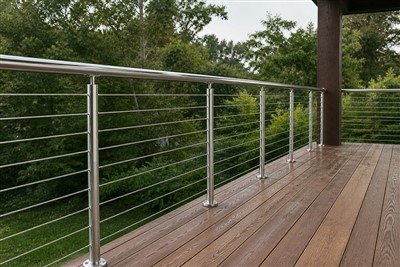
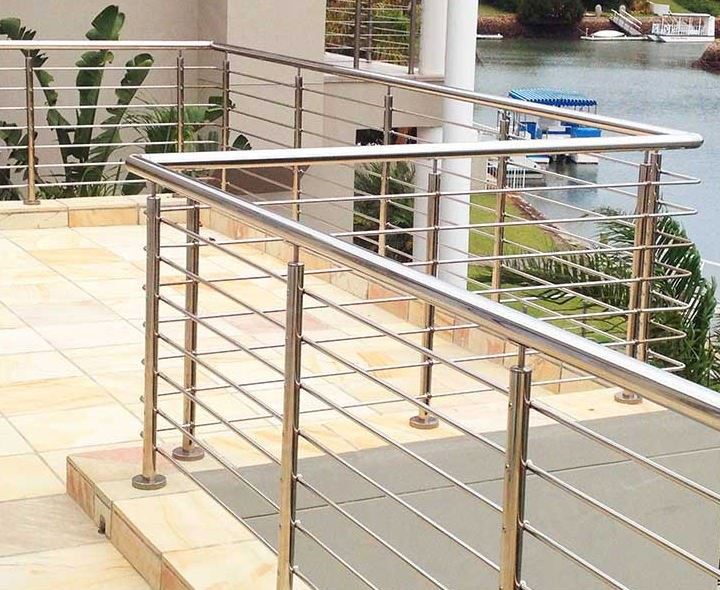
Our Horizontal Cable Railing has a different sound - reflecting characteristic compared to our Vertical Cable Railing. The horizontal arrangement can cause sound waves to bounce in a more linear pattern, while the vertical one can disperse the sound in different directions. This can give you more flexibility in terms of how you want to manage the sound in your space.
Another aspect of acoustic properties is sound transmission. Sound transmission is about how well sound passes through a structure. Cable railing, being relatively lightweight compared to solid walls, can transmit sound more easily. But this also depends on how it's installed. If the railing is properly secured to a solid frame, it can help reduce the amount of sound that gets transmitted.
For instance, our Horizontal Aluminum Cable Railing is not only lightweight but also has good structural integrity. When installed correctly, it can minimize sound transmission between different areas. This is great for multi - level buildings or areas where you want to keep noise from traveling too far.
The type of metal used in cable railing can also play a role in its acoustic properties. Stainless steel is a common material, and it has a certain acoustic signature. It has a relatively high density, which means it can make the sound waves bounce off it more sharply compared to some other metals. On the other hand, aluminum is lighter and can transmit sound in a different way. Our Metal Cable Railing options give you a range of choices depending on the acoustic effect you're after.
In outdoor environments, cable railing can interact with the natural elements and the ambient sound. The wind blowing through the cables can create a unique sound, almost like a gentle whistling. Some people find this sound quite soothing, like the sound of the ocean waves. It can add an extra layer of ambiance to your outdoor space.
In an indoor setting, cable railing can be used to separate different areas while still allowing some sound to pass through. This can create an open - concept feel while also maintaining a certain level of privacy. For example, in a large office space, cable railing can be used to divide work areas without completely blocking the sound, which can promote communication and collaboration.

So, as you can see, the acoustic properties of cable railing are quite complex and can have a big impact on the overall sound environment. Whether you're looking to reduce noise, create a certain ambiance, or manage sound transmission, there are a lot of factors to consider.
If you're interested in learning more about how our cable railing can meet your acoustic needs, or if you're ready to start a project, don't hesitate to reach out. We're here to answer all your questions and help you choose the perfect cable railing for your space.
References
- Acoustics Handbook, edited by Malcolm J. Crocker
- Building Acoustics: Principles and Practice by Trevor Cox and Peter D'Antonio