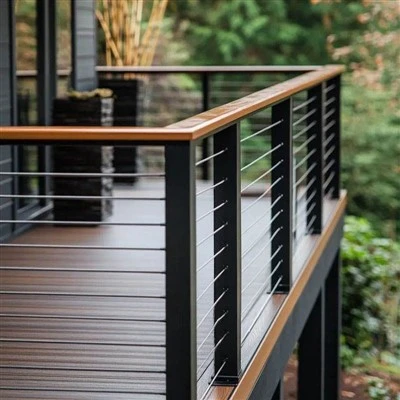
The environmental friendliness of aluminum alloy fences is mainly regulated through three aspects: raw materials, production process, and end-use recycling. The following are the specific requirements of major global standards:
1.Restrictions on Hazardous Substances in Materials
The EU RoHS Directive stipulates that the maximum content of six hazardous substances in aluminum materials, including lead (Pb), cadmium (Cd), and mercury (Hg), is 0.1% (1000 ppm), and hexavalent chromium (Cr6+) is 0.01% (100 ppm). Reference source: EU Directive 2011/65/EU.
China's GB/T 5237-2017 requires that the content of lead and cadmium in aluminum profiles be ≤0.1% respectively, and other heavy metals must comply with the "Comprehensive Plan for the Prevention and Control of Heavy Metal Pollution".
2.Environmental Friendliness of Surface Treatment Processes
Powder coating must comply with the EU QUALICOAT Class 1 standard, with VOC (volatile organic compound) emissions ≤50g/m².
In the anodizing process, the concentration of chromium ions in the wastewater must be below 0.5 mg/L (China's Integrated Wastewater Discharge Standard GB 8978-1996).
3.Prioritize the use of recycled aluminum: The energy consumption of recycled aluminum production is only 5% of that of virgin aluminum, and carbon emissions are reduced by 95% (data from the International Aluminium Institute).
4.Design a modular structure: Facilitates disassembly and recycling, increasing material recycling rate to over 90%.