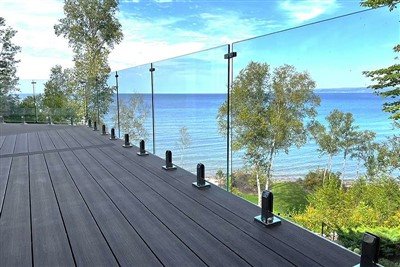
Hey there! As a supplier of Glass Panel Railing Systems, I often get asked about the load - bearing requirements for these sleek and modern railing systems. So, I thought I'd take some time to break it all down for you.
First off, let's understand why load - bearing requirements are so important. A glass panel railing system isn't just for looks; it's a safety feature that needs to hold up under various conditions. Whether it's people leaning against it, wind pushing against the glass panels, or even the weight of snow in colder climates, the railing has to be able to handle it all.
Types of Loads
Dead Load
The dead load is basically the weight of the railing system itself. This includes the weight of the glass panels, the posts, and any hardware used to install the railing. Different types of glass have different weights. For example, tempered glass, which is commonly used in Glass Panel Railing System, is heavier than some other types of glass due to the tempering process. The posts and hardware also contribute to the dead load. When designing a railing system, we need to calculate this dead load accurately to ensure that the structure can support it.
Live Load
The live load refers to the weight of the people or objects that will come into contact with the railing. In a residential setting, this might be a few family members leaning on the railing. In a commercial setting, like a large balcony or a public building, the live load can be much higher. Building codes usually specify a minimum live - load capacity for different types of applications. For example, a balcony in a multi - family dwelling might have to support a certain amount of weight per square foot to ensure the safety of the residents.
Wind Load
Wind can be a major factor, especially for exterior railings. The force of the wind can push against the glass panels, creating a lateral load. The amount of wind load a railing system needs to withstand depends on several factors, including the location of the building, the height of the railing, and the shape of the glass panels. Coastal areas or high - rise buildings are likely to experience stronger winds, so the railing systems in these areas need to be designed to handle higher wind loads.
Building Codes and Standards
Building codes and standards play a huge role in determining the load - bearing requirements for a glass panel railing system. These codes are put in place to ensure the safety of the people using the building. In the United States, the International Building Code (IBC) and the International Residential Code (IRC) are two of the most widely used codes.


The IBC has specific requirements for guardrails, which include glass panel railings. For example, it specifies the maximum allowable deflection of the railing under a certain load. This means that the railing can't bend too much when a force is applied to it. The IRC, on the other hand, is more focused on residential construction. It also has requirements for railing height, spacing between elements, and load - bearing capacity.
It's crucial for us as a supplier to stay up - to - date with these codes. We work closely with architects and contractors to make sure that the railing systems we provide meet all the necessary requirements. This not only ensures the safety of the end - users but also helps avoid any legal issues down the line.
Design and Installation Considerations
Glass Thickness
The thickness of the glass panels is a key factor in determining the load - bearing capacity of the railing system. Thicker glass can generally handle more weight and pressure. For most residential applications, 1/2 - inch or 3/4 - inch thick tempered glass is commonly used. In commercial settings or areas with high wind loads, even thicker glass might be required.
Post Spacing
The distance between the posts also affects the load - bearing capacity. Closer post spacing provides more support for the glass panels, allowing the railing to handle higher loads. When designing the railing system, we need to consider the size and shape of the glass panels, as well as the expected loads, to determine the appropriate post spacing.
Installation Method
The way the railing system is installed is just as important as the design. Proper installation ensures that the load is distributed evenly across the entire system. For example, the posts need to be securely anchored to the floor or a solid structure. If the installation is not done correctly, the railing may not be able to handle the loads as intended, which can lead to safety issues.
Different Applications and Their Load - Bearing Needs
Glass Patio Railing
A glass patio railing is typically used in a residential setting. The load - bearing requirements are usually lower compared to commercial applications. The main loads it needs to handle are the weight of a few people leaning on it and some light wind. However, it still needs to meet the local building codes to ensure safety.
Exterior Glass Railing System
Exterior glass railings, whether on a balcony, terrace, or in a public space, are exposed to more elements. In addition to the live load of people, they need to withstand wind, rain, and sometimes snow. The load - bearing requirements for these railings are often higher, especially in areas with extreme weather conditions.
Frameless Glass Railing System
Frameless glass railings offer a sleek and modern look but can be more challenging in terms of load - bearing. Without the support of a frame, the glass panels need to be designed and installed in a way that they can bear the loads on their own. This usually means using thicker glass and carefully calculating the post spacing and anchoring.
Frameless Glass Balcony
A frameless glass balcony is a high - end feature that requires a high level of engineering to meet the load - bearing requirements. It not only has to support the weight of the people on the balcony but also deal with any lateral forces from wind or other external factors.
How We Ensure Our Railing Systems Meet Load - Bearing Requirements
As a supplier, we take several steps to ensure that our glass panel railing systems meet the necessary load - bearing requirements:
- Material Selection: We only use high - quality glass and hardware. Our tempered glass is tested to meet industry standards for strength and durability.
- Engineering and Design: Our team of engineers uses advanced software to calculate the loads and design the railing systems accordingly. We consider all the factors, including the type of application, location, and expected loads.
- Quality Control: We have strict quality control measures in place during the manufacturing and installation process. Every railing system is inspected to make sure it meets our high standards and the relevant building codes.
If you're in the market for a glass panel railing system, whether it's for a residential patio or a commercial building, we're here to help. Our team of experts can work with you to understand your specific needs and design a railing system that not only looks great but also meets all the load - bearing requirements. Don't hesitate to reach out to us to discuss your project and get a quote. We're committed to providing the best products and services to ensure your safety and satisfaction.
References
- International Building Code (IBC)
- International Residential Code (IRC)
- Industry standards for glass and railing systems