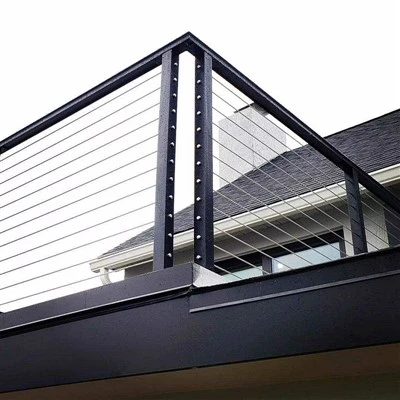
Based on the degree of deformation after a collision, i.e., different stiffness, barriers can be divided into flexible barriers, semi-rigid barriers, and rigid barriers. Cable barriers are the main representative form of flexible barriers, possessing a high buffering capacity and resilience. They consist of several cables with initial tension fixed to end posts, forming a cable structure. During a vehicle collision, the tensile stress of the cables absorbs the impact energy.
The barrier designation consists of three parts: the barrier construction type designation, the protection level designation, and the installation condition designation. The construction type designation Gc represents a cable barrier. Common cable barrier models in construction drawings include the HFS-36, HFS-39, HFS-38, and HFS-40 series.